Hi your attachment style is

Disorganized

You're one step closer to understanding yourself better and improving your relationships.

We hope you are ready to access your Attachment Style Quiz results and discover how to heal in your self-perceptions and relationships with others.

What does it mean to be disorganized?

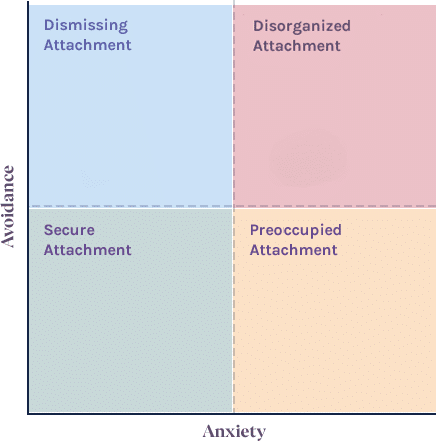
The disorganized attachment style (also known as fearful-avoidant) is characterized by a strong desire for close connections and intimacy, but also an intense fear of getting hurt within relationships. The traits of this attachment style tend to alternate between those of the avoidant and anxious styles depending on the person’s mood, experiences, and circumstances.

Due to their early experiences, people with this attachment style struggle with feelings of fear, mistrust, and inner conflict – especially in relationships. For this reason, someone with a disorganized attachment style displays a “push-pull” pattern of behaviors, a lack of effective coping skills, and low-self esteem.

Attachment graph
Take the Attachment Style Quiz

If you’ve taken the quiz check your email for the report. Token Invalid.

Your Ultimate Digital Workbook includes:

  • A digital 446 page workbook
  • 114 pages of practical exercises
  • The most up-to-date research on attachment
  • Psychological prompts and dedicated areas for response
  • Guides to the different types of attachment styles so you can better understand the important people in your life
  • Detailed descriptions about how each attachment style develops in childhood
  • Information on how the different attachment styles interact with one another
  • Delivery via email for immediate access

How can you understand your attachment style and break free from insecurities and avoidance?

If your avoidant traits are affecting your relationships, ability to trust in others, and, subsequently, quality of life, our workbooks are the first step on your journey to positive change.

rating rating rating rating rating

“This workbook had all the answers! It wasn’t until I started trying the exercises that I realized how much of an impact it actually has! The info about the strengths of my attachment style was really helpful to read, as I feel like I can get bogged down in the “something’s wrong with me” thoughts sometimes.”

Emma L.

rating rating rating rating rating

“I did the test, and got a pretty accurate analysis, so thought I’d give the anxious workbook a try. It really has helped me a lot with understanding my behavior and why I act in certain ways in my relationships. More importantly, though, it has taught me some practical ways to change it!”

Nima M.

rating rating rating rating rating

“Wow! My behavior makes so much more sense now. I’ve always been a people-pleaser, afraid that people would leave me if I wasn’t. But now that I understand why I’ve done this and how it affects my behavior, I can notice when it’s happening and put a stop to it. It’s going to be tough, but I’m ready to make some meaningful changes.”

Shauna C.

rating rating rating rating rating

“I strongly recommend this workbook to anyone with an avoidant attachment style. The exercises were really helpful and helped me better understand my attachment style as well as how to deal with it. I recommend it to anyone who wants to improve their relationships by working on their attachment style.”

Alessandro C.

rating rating rating rating rating

“I thought disorganized attachment was the end of my world – that I’d never find love. Through the workbook, I realized that I have a set of learned behaviors and felt more empowered to change my life and really dig deep into who I was. I still get triggered from time to time, but my partner and I are more able to work it out.”

Phillip T.

Your Disorganized Attachment Digital Workbook includes:

  • 203 pages, including 29 pages of practical exercises
  • How disorganized attachment affects you in over 10 different areas of life
  • 4 case studies on disorganized attachment
  • Groundbreaking and up-to-date research on disorganized attachment
  • Section recaps and areas for reflection

How will this workbook help me?

To help you decide whether our workbook is right for you, here’s everything you’ll learn about:

Part 1: All About Attachment

Clearly explains the concept of attachment theory and the main differences between each attachment style

Part 2: Your Attachment Style (Disorganized)

Details how disorganized attachment forms in early childhood, how it affects areas of your life like relationships and work, and how to identify your attachment superpowers

This section also includes helpful exercises from the included “Disorganized Attachment Exercise Book”

Part 3: Therapies and Alternative Approaches

To help you determine if therapy is the right route for you – and which form

Part 4: Attachment & Neuroscience

Assists in your understanding of how your brain responded to your early experiences and helps you move past self-blame

Part 5: Disorganized Attachment Exercises

A range of exercises designed to help address issues associated with avoidant attachment: early experiences, self-perceptions, thoughts and actions, and outlook on relationships.

To help you decide whether our workbook is right for you, here’s everything you’ll learn about:

Part 1: All About Attachment

Clearly explains the concept of attachment theory and the main differences between each attachment style

Part 2: Your Attachment Style (Disorganized)

Details how disorganized attachment forms in early childhood, how it affects areas of your life like relationships and work, and how to identify your attachment superpowers

This section also includes helpful exercises from the included “Disorganized Attachment Exercise Book”

Part 3: Therapies and Alternative Approaches

To help you determine if therapy is the right route for you – and which form

Part 4: Attachment & Neuroscience

Assists in your understanding of how your brain responded to your early experiences and helps you move past self-blame

Part 5: Disorganized Attachment Exercises

A range of exercises designed to help address issues associated with avoidant attachment: early experiences, self-perceptions, thoughts and actions, and outlook on relationships.
“The human psyche, like human bones, is strongly inclined towards self-healing.”

John Bowlby, founder of Attachment Theory

rating rating rating rating rating

“This workbook had all the answers! It wasn’t until I started trying the exercises that I realized how much of an impact it actually has! The info about the strengths of my attachment style was really helpful to read, as I feel like I can get bogged down in the “something’s wrong with me” thoughts sometimes.”

Emma L.

rating rating rating rating rating

“I did the test, and got a pretty accurate analysis, so thought I’d give the anxious workbook a try. It really has helped me a lot with understanding my behavior and why I act in certain ways in my relationships. More importantly, though, it has taught me some practical ways to change it!”

Nima M.

rating rating rating rating rating

“Wow! My behavior makes so much more sense now. I’ve always been a people-pleaser, afraid that people would leave me if I wasn’t. But now that I understand why I’ve done this and how it affects my behavior, I can notice when it’s happening and put a stop to it. It’s going to be tough, but I’m ready to make some meaningful changes.”

Shauna C.

rating rating rating rating rating

“I strongly recommend this workbook to anyone with an avoidant attachment style. The exercises were really helpful and helped me better understand my attachment style as well as how to deal with it. I recommend it to anyone who wants to improve their relationships by working on their attachment style.”

Alessandro C.

rating rating rating rating rating

“I thought disorganized attachment was the end of my world – that I’d never find love. Through the workbook, I realized that I have a set of learned behaviors and felt more empowered to change my life and really dig deep into who I was. I still get triggered from time to time, but my partner and I are more able to work it out.”

Phillip T.

If in doubt, here are some FAQs

Why this workbook? Why not go straight to therapy?

We wish to highlight that therapy with a trained mental health professional is the most appropriate route for people with mental health difficulties. This workbook works well for people who are not in significant mental health distress or as a therapy aid. Most therapies start with building self-awareness and the foundations for self-development; this workbook can help you start this process by aiding you in accessing deeper understanding.

Why should I choose this workbook over other books on attachment?

The Attachment Project workbooks are different from others on the market as they are designed with the user perspective in mind. Meaning that our goal is to help you both understand and process your attachment issues by providing information on how your attachment style developed and affects your current relationships, as well as exercises on how to internalize this information. We also dedicate ourselves to the field of attachment through ever-expanding research and disseminating new information to our audience. So you’re in the hands of people who truly care about your health. 

What format does this workbook come in?

At this time, all of our workbooks are in digital PDF form. This is due to the regularity with which we update our workbooks with the latest research and information, as well as access to extra worksheets. 


Who Is The Attachment Project?

“The Attachment Project is dedicated to educating and enabling one to work through their attachment style and overall psychological health.”

– Paula Sacks, Attachment Specialist and Author

The Attachment Project’s mission is to be at the forefront of attachment theory. We are committed to providing our community with the leading approaches to attachment theory and pioneering and investing in advancements in the field. Here are some of the things we’ve achieved:

  • Raised over $700,000 (USD) for cultural preservation projects in Nepal.
  • Helped over 1 million people discover their attachment style and start their healing journey using our online Attachment Quiz.
  • Shared free content (and continue to) on our blog and Instagram to spread the awareness of attachment theory and provide no-cost support and information to anyone who needs it.
  • A range of online tools to support insecure attachers on their healing journey.