









8 Signs an Avoidant Loves You

Dating someone with an avoidant attachment style can be confusing, especially if you don’t recognize how avoidants show love. You might already know that people with avoidant attachments are less interested in intimacy and prefer to keep others at arm’s length, even if they do want a relationship – if this is the case, then what are the signs an avoidant loves you?
In this article, you’ll find out more about how avoidant attachment styles show up in relationships, how people with avoidant attachment styles show that they love someone, and signs an avoidant still loves you – even if they’re scared.
DISCOVER YOUR ATTACHMENT STYLE
Why Is It Hard to Know if an Avoidant Loves You?
People with avoidant attachment styles typically aren’t open to high levels of intimacy and vulnerability. They can shut down when things get emotionally intense, whether those emotions are positive or negative, and they often aren’t comfortable expressing that they care about someone. Even though this might sound unideal to some of us, studies have found that people with avoidant attachment styles are happiest in relationships with less intimacy1.
People with secure or anxious attachment styles prefer more intimacy than avoidant attachment styles, so they might find avoidant partners tricky to read.
How Avoidants Show Love
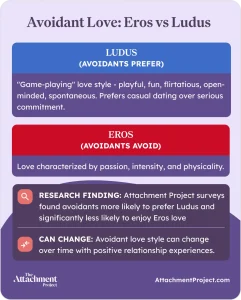
Studies on attachment and love styles have found that avoidance is usually related to the love style Ludus2, 3. Ludus is described as a “game-playing” love style, preferring playfulness and fun over serious commitment. People who prefer Ludus love can be flirtatious, open-minded, and spontaneous, and they generally prefer casual dating – this non-committal approach aligns with avoidant preferences, so it’s not surprising that there’s some crossover.
Our own surveys at The Attachment Project found a similar pattern: people scoring highly on attachment avoidance were more likely to prefer the Ludus love style, and significantly less likely to enjoy Eros love: the love style characterized by passion, intensity, and physicality.
With this in mind, we’re starting to build a picture of how avoidants show love. However, the way someone with an avoidant attachment style shows love can depend on the nature of your relationship. Studies have found that even though avoidant attachment styles score lower on supportive, verbal, and non-verbal affection, this can be affected by the love they have for their partner4.
In turn, an avoidant partner’s own experience of positive relationship events and validating behaviors can decrease their level of romantic avoidance5. This means that your avoidant partner’s way of showing love could change over time, but if you’re still looking for signs an avoidant loves you, here are some common themes shared by people with avoidant attachment styles:
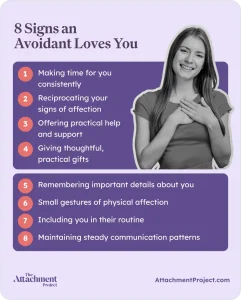
8 Signs an Avoidant Loves You
1. Making time for you
Avoidant partners say that when they care about someone, they make time for them – even if that time is not as often as you’d like. They don’t pressure you to make plans (because they wouldn’t like it if somebody did that to them), but by setting aside a time and date to see you they are showing that they value your company.
This might look like:
- Consistently scheduling regular dates or meetups, even if infrequent
- Prioritizing your time together over other social commitments
- Being punctual and reliable when you do make plans
- Suggesting activities they know you’ll enjoy
2. Reciprocating your signs of affection
Some avoidant partners say that they follow their partner’s lead when it comes to affection. They’re not comfortable showing vulnerability, so they only feel safe matching your energy – for example, they might wait to say “I love you” until after you’ve said it first, or refrain from physical affection while on a date until you initiate it.
Examples of this reciprocation include:
- Mirroring your physical touch after you initiate contact
- Responding positively to your verbal affirmations with their own version
- Matching your energy level in romantic situations
- Gradually becoming more comfortable with expressions of love over time
3. Offering practical help
Many avoidant partners say that they show their love with practical help – think picking you up at the airport, bringing you food when you’re sick, or helping you study. If an avoidant partner shows you practical support, acknowledge it without “making it a big deal” as this can trigger their feelings of vulnerability, but know that they’re doing this because they care.
Practical help might include:
- Solving problems for you without being asked
- Taking care of logistics for shared activities or trips
- Offering their skills or expertise when you need assistance
- Being reliable during stressful times in your life
4. Giving gifts
Similarly, giving gifts can help avoidant partners to express their feelings without the need for words or physical intimacy. Avoidant partners say that they like to give practical gifts, or gifts that you might have mentioned before to show that they were listening.
Their gift-giving style often involves:
- Thoughtful, practical items that make your life easier
- Gifts that show they’ve been listening to your conversations
- Small, meaningful tokens rather than grand gestures
- Items related to your hobbies or interests that they remember
5. Remembering important things
Remembering things like the gifts you’d like or the support you need is important to avoidant partners. Many say that they show they care by listening and remembering the small things so that their gifts and actions are more meaningful.
This attention to detail shows up as:
- Recalling personal details you’ve shared in conversations
- Remembering important dates and events in your life
- Noticing changes in your mood or behavior and responding appropriately
- Following up on things you’ve mentioned caring about or worrying about
6. Small gestures of physical affection
While avoidant partners can be less interested in intimacy, some say that they do show their love through more subtle gestures of physical affection. This might look like gentle touches or intentional contact while you’re relaxing together.
These subtle physical signs include:
- Light touches on your arm or shoulder during conversation
- Sitting closer to you than they do with others
- Brief moments of hand-holding or cuddling
- Comfortable physical presence without needing constant contact
7. Including you in their routine
For someone who values independence highly, including you in their established routines and daily life is a significant sign of love. This shows they’re willing to adjust their preferred autonomy to make space for you.
This integration might look like:
- Inviting you to regular activities they normally do alone
- Sharing their personal space and allowing you into their environment
- Introducing you to their established friend groups or family
- Including you in decision-making about their daily choices
8. Consistent communication patterns
While they may not be emotionally expressive, avoidants who love you will maintain steady, reliable communication. They won’t disappear for days without explanation or leave you guessing about their interest.
Healthy communication patterns include:
- Regular check-ins, even if brief
- Responding to your messages within a reasonable timeframe
- Sharing basic information about their day or plans
- Being honest about their need for space rather than withdrawing without explanation
DISCOVER YOUR ATTACHMENT STYLE
Are There Signs an Avoidant Loves You but Is Scared?
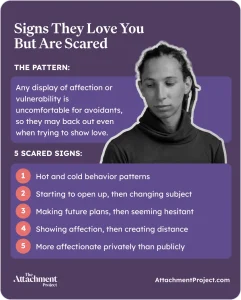
If somebody with an avoidant attachment shows the above signs, they might be trying to show their affection for you. However, just because they are common this does not mean they are easy – any display of affection, intimacy, or vulnerability could be uncomfortable for someone with an avoidant attachment style. If your partner does seem to try to show their affection in the above ways but ultimately backs out, they might be scared.
Signs they love you but are scared might include:
- Hot and cold behavior – showing affection one day and withdrawing the next
- Starting to open up and then quickly changing the subject
- Making plans for the future and then seeming hesitant about them
- Showing physical affection and then creating distance afterward
- Expressing care indirectly through actions but struggling with words
- Being more affectionate in private than in public or social settings
What Are the Signs an Avoidant Still Loves You and Misses You?
If you’re experiencing separation from an avoidant partner and wondering whether they still love you and/or miss you, it might be difficult to spot the signs. The nature of their attachment style is that they can be incredibly self-reliant, so while you might be resisting the urge to make contact, they are less likely to experience distress6.
If an avoidant partner does reach out during conflict, understand that this in itself is a strong sign that they care. If they continue to show the signs listed above, they may be showing that they still love and miss you and they might want to come back.If an avoidant partner does reach out during conflict, understand that this in itself is a strong sign that they care and might want to come back.
Additional signs they miss you might include:
- Indirect contact through mutual friends or social media
- Asking about your wellbeing through others
- Showing up in places where they know you’ll be
- Reaching out with practical excuses to maintain contact
- Keeping items that remind them of you or your relationship
- Taking longer than usual to return your belongings after a breakup
How to Respond to Avoidant Love Signs
Recognizing these signs is just the first step. How you respond can either encourage your avoidant partner to continue opening up or cause them to retreat further. Here are some strategies:
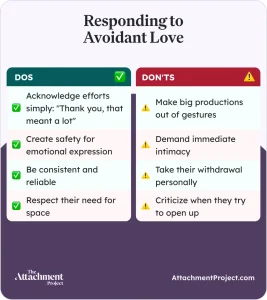
Acknowledge Without Overwhelming
When you notice these signs of love:
- Express appreciation simply – “Thank you, that meant a lot to me”
- Avoid making a big production out of their gestures
- Don’t demand more immediate intimacy as a result
- Show that you recognize their effort without pressuring for more
Create Safety for Emotional Expression
Help your avoidant partner feel secure by:
- Being consistent and reliable in your own behavior
- Respecting their need for space without taking it personally
- Avoiding criticism when they do try to be emotionally open
- Setting clear boundaries about your own needs
When to Be Concerned
While understanding avoidant love signs is important, it’s also crucial to ensure your own needs are being met. Consider whether:
- The relationship feels reciprocal, even if expressed differently
- You’re getting enough emotional fulfillment
- Your partner is making gradual progress toward more openness
- You can maintain your own emotional security and self-worth
If you find yourself constantly anxious, walking on eggshells, or feeling emotionally starved, it may be time to reassess whether this relationship is meeting your fundamental needs.
Conclusion
It can be difficult to recognize how avoidant partners show their affection at first, but understanding avoidant love styles can help you to learn how your partner might show that they love you. Understanding how someone shows and receives love is important for a fulfilling and healthy relationship, which, over time, might help your partner move towards a more secure attachment style.
Remember that recognizing these signs doesn’t mean you should accept less than what you need in a relationship. Healthy relationships require both partners to feel valued and secure, regardless of their attachment styles. With patience, understanding, and clear communication about needs and boundaries, avoidant partners can learn to express love more openly while you learn to recognize and appreciate their unique way of showing care.
To learn more about your own attachment style, take our free Attachment Style Quiz.
Frequently Asked Questions About Avoidant Love Signs
How long does it take for an avoidant to show love?
The timeline varies greatly depending on the individual and the relationship dynamic. Some avoidants may show subtle signs of love within weeks or months, while others may take much longer to feel safe enough to express affection. Patience and consistency from their partner can help accelerate this process.
Do avoidants show love differently than other attachment styles?
Yes, avoidants typically express love through actions rather than words, practical support rather than emotional declarations, and consistency rather than grand gestures. Their love language tends to be more subtle and indirect compared to anxious or secure attachment styles.
Can an avoidant’s way of showing love change over time?
Absolutely. As avoidants experience positive, validating relationship experiences, they often become more comfortable with emotional expression and intimacy. A secure, patient partner can help facilitate this growth toward more open expressions of love.
What should I do if I don’t feel loved despite these signs?
It’s important to communicate your needs clearly and kindly. While understanding avoidant love signs helps, you shouldn’t sacrifice your own emotional needs. Consider whether the relationship can grow to meet both your needs or if you might be incompatible in fundamental ways.
Is it normal for avoidants to withdraw after showing affection?
Yes, this is common. Showing affection can make avoidants feel vulnerable, so they may need space afterward to regulate their emotions. This doesn’t necessarily mean they regret the affection – it’s often just their way of managing the intensity of the emotional experience.
How can I encourage my avoidant partner without pressuring them?
Focus on creating a safe, non-judgmental environment. Acknowledge their efforts when they do show affection, avoid criticizing their emotional style, maintain your own emotional stability, and be patient with their timeline for opening up.
References
- Mikulincer M, Erev I. Attachment style and the structure of romantic love. British Journal of Social Psychology. 1991 Dec;30(4):273-91.
- Şahin SM, Çoksan S. The relationship between attachment styles, love types, emotional expression and life satisfaction. PsyArXiv. March. 2020 Mar 14;14.
- Levy MB, Davis KE. Lovestyles and attachment styles compared: Their relations to each other and to various relationship characteristics. Journal of social and Personal Relationships. 1988 Nov;5(4):439-71.
- Dillow MR, Goodboy AK, Bolkan S. Attachment and the expression of affection in romantic relationships: The mediating role of romantic love. Communication Reports. 2014 Jul 1;27(2):102-15.
- Bayraktaroglu D, Gunaydin G, Selcuk E, Besken M, Karakitapoglu-Aygun Z. The role of positive relationship events in romantic attachment avoidance. Journal of personality and social psychology. 2023 May;124(5):958-70.
- Davis D, Shaver PR, Vernon ML. Physical, emotional, and behavioral reactions to breaking up: The roles of gender, age, emotional involvement, and attachment style. Personality and Social Psychology Bulletin. 2003 Jul;29(7):871-84.
 Get mental health tips straight to your inbox