










How Attachment Styles Affect Our Relationships with Pets
How Attachment Styles Affect Our Relationships with Pets

People love their pets. In fact, it is not unusual for people to report that they are more strongly attached to their pets than they are to other people. Given that Attachment Theory is key in helping us understand and improve our relationships with others, can it also help us understand our relationships with pets? And can it help us decide which pet is best for us?
To help answer these questions as accurately as possible, this article covers the topics of…
- What attachment theory is
- How attachment might relate to our choice of pet
- The different attachment styles and pet preferences
- The potential risks of pet ownership with an insecure attachment style
People love their pets. In fact, it is not unusual for people to report that they are more strongly attached to their pets than they are to other people. Given that Attachment Theory is key in helping us understand and improve our relationships with others, can it also help us understand our relationships with pets? And can it help us decide which pet is best for us?
To help answer these questions as accurately as possible, this article covers the topics of…
- What attachment theory is
- How attachment might relate to our choice of pet
- The different attachment styles and pet preferences
- The potential risks of pet ownership with an insecure attachment style
Do you know your attachment style?
Take our attachment quiz and find out now – fast, easy, free.
What Is Attachment Theory?
The relationship we form with our primary caregiver as an infant provides us with the framework for what we expect from future relationships. If a primary caregiver is patient and attuned to the majority of a child’s needs, the child will likely develop a secure attachment. However, if caregivers do not respond adequately to the majority of a child’s needs, then they may develop one of the three forms of insecure attachment: anxious, avoidant, and disorganized.
In regards to the development of the anxious attachment style, the primary caregiver may have been inconsistent or unreliable in their support; loving one moment and distant the next. Having this type of attachment can lead to fear of abandonment as an adult. However, with an avoidant attachment style, the primary caregiver may have shut down the child’s emotional expressions and rejected their attempts at affection. This attachment style can lead to the child growing up with discomfort around relational intimacy and dependence. Finally, in the case of disorganized attachment, the primary caregiver may have induced fear or trauma in their child, which may result in desiring intimacy, but also extreme difficulties with trusting others in adulthood.
If you would like to find out more about your attachment style, take the free attachment styles quiz on our website for your report.
So, as we can see, the different attachment styles influence our relationships in unique ways. But what might this information mean for our bonds with our furry companions?


How Attachment Relates to Our Choice of Pet
Deciding to get a pet is an important decision; it requires dedication and commitment to ensure the pet’s well-being and also requires you to think ahead in terms of where you will be and when. But equally, bringing a pet into your life can provide you with many moments of joy and companionship. Owning pets has been shown to decrease loneliness and, by increasing the amount of opportunities taken for exercise, improve physical health. Even just being with a pet can decrease the effects of stress on blood pressure and improve future goal-making ability.
Given that an owner-pet relationship provides a lot of joy but also requires dedication and commitment, it draws parallels to the parent-child bond. In fact, studies show that people interact with their dogs in similar ways as they do children. As our attachment style is the framework through which we navigate relationships, and also strongly affects the parent-child bond, it makes sense that it may also have an impact on our relationships with pets. This was certainly found to be the case in a study of dogs and their owners, where there were significant differences in the behavior of the dogs based on their owner’s attachment style.
While owning a pet is beneficial to most people, there may be a potential added benefit for those with an insecure attachment style. This is because having a pet can be seen as a safer and less complicated way to have affectionate and trusting relationships without worries of abandonment or the pressures of reciprocal intimacy. For example, relationships with dogs were perceived to involve both less avoidance and anxiety compared to relationships with people.
But how might our attachment style influence our preferred choice of pet?
The Different Attachment Styles and Preferred Pet
Although it may be easy to assume that people high on attachment avoidance would gravitate towards cat ownership and that those high on attachment anxiety would prefer dog ownership, the real evidence comes from the studies on pet choice and attachment to date.
Anxious “Dog People” Versus Avoidant “Cat People”
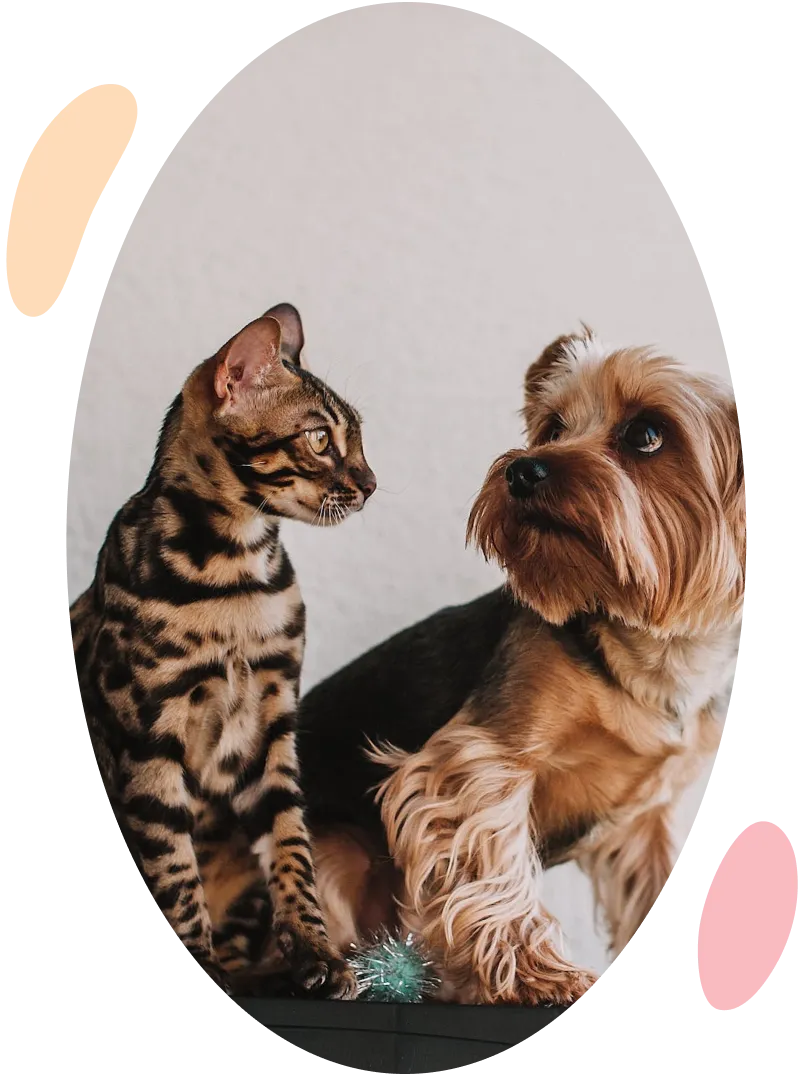
It is widely accepted within most cultures that there are “cat people” and “dog people.” Indeed, research has backed this claim, with individual differences found between the two types of people. Namely, dog people scored higher on traits such as warmth, liveliness, conscientiousness, competitiveness, social boldness, extraversion, and agreeableness. In contrast, cat people scored higher on intelligence, abstractedness, self-reliance, neuroticism, and openness to experiences. It was also found that people were more likely to believe that dogs are better able to understand and predict their owner’s emotions and behaviors than cats, or, in other words, have more theory of mind.
Based on everything we have learned so far, it seems understandable that those with an anxious attachment style may prefer a more affectionate and dependent pet, like a dog, while those with an avoidant style may prefer a more independent pet, such as a cat. Furthermore, we could also assume based on evidence that anxious attachers would be more likely to want a pet with a greater theory of mind. This understanding has been somewhat supported in research, with dogs being perceived as having more secure attachment-related characteristics. Oppositionally (yet, predictably) cats were perceived as having more avoidant attachment-related characteristics. After all, as the adage goes, “If you want a companion, you get a dog. If you want a roommate, you get a cat.”
Has an Attachment-Based Pet Preference Been Found in Research?
Despite the reasoning around people high on the dimension of anxious attachment preferring dogs, and those high on avoidance preferring cats, there is no clear evidence for this preference in research to date. In fact, perhaps the most interesting finding is that the anxious attachment style was associated with wanting to own a pet, while having an avoidant attachment style was associated with not wanting to own a pet at all.
With regards to the desire to own a cat, this was associated with scoring higher on anxious attachment and lower on avoidant attachment–the opposite of what would be expected. Additionally, neither anxiety nor avoidance predicted recently adopting a cat instead of a dog.
In contrast, no associations have been found between attachment styles and wanting to own a dog. Interestingly, people with lower levels of anxiety were more likely to have adopted a dog instead of a cat–so, again, the opposite of what would be expected. And, as a final note on this point, people may be more likely to adopt a dog instead of a cat if they want a pet to help facilitate relationships with other people.


The Drawbacks of Insecure Attachment and Pet Ownership
Despite the lack of association between attachment styles and pet preference, there is some evidence to suggest that insecure attachment may be linked to negative aspects of pet ownership. For example, those high on the dimension of avoidant attachment reported turning to their pet as a replacement for human companionship. In contrast, people high on the dimension of anxiety reported increased concerns about their pets needing more attention.
In fact, despite the numerous benefits of having a pet, a study has shown that those with a strong attachment to their dogs are more likely to have a greater fear of being unloved or rejected and to have difficult relationships with other people–plus high levels of mental health distress as a result. This may be because the owner is using their pet as a substitute for secure relationships with other people as pets are seen to be more reliable and less threatening than people. For example, it was found that children with an avoidant or disorganized attachment style experiencing social stress benefited more from the presence of a therapy-dog than from the presence of a friendly human.
Final Words on How Attachment Styles Influence Pet Choices
While there is a relationship between attachment styles and peoples’ relationships with their pets, at present, there is no clear link between attachment styles and pet preferences according to evidence.
However, becoming a pet owner has been shown to improve both health and well-being, but, to fully benefit from these advantages, it’s important to understand your reasons for wanting a pet. Enhancing your self-awareness will ensure that you don’t fall into the trap of using a pet to get the love and support you need from others, as you may be better able to set healthy boundaries for yourself around your pet ownership and relationships with others. For example, if you are stressed, you could make the commitment to talk to another person about it rather than using your pet as your sole confidant or outlet. However, once you are clear on your boundaries, pet ownership can be a wonderful and enriching part of your life.
Beetz, A., Uvnäs-Moberg, K., Julius, H., & Kotrschal, K. (2012) Psychosocial and psychophysiological effects of human-animal interactions: the possible role of oxytocin. Frontiers in Psychology, 3, 234.
Green, J. D., Coy, A. E., & Mathews, M. A. (2018) Attachment anxiety and avoidance influence pet choice and pet-directed behaviors. Anthrozoös, 31(4), 475–494.
Lass-Hennemann, J., Schäfer, S.K., Sopp, M.R., & Michael, T. (2022) The relationship between attachment to pets and mental health: the shared link via attachment to humans. BMC Psychiatry 22, 586.
Link, J. (2021). People-pleasing animals: mediating factors in attachment style difference between dog people and cat people [Doctoral dissertation, State University of New York]. SUNY Open Access Repository.
 Get mental health tips straight to your inbox