











Are Your Relational Patterns Affecting Your Relationship’s Wellness?
Discover your relationship wellness score!
Are Your Relational Patterns Affecting Your Relationship’s Wellness?
Discover your relationship wellness score!
Do Your Relational Wishes Match Your Behaviors?
Take Our Free Quiz to Find Out Your Relationship Wellness Score!

How We Measure Relationship Wellness?
This test is made up of three main components: relational wishes, responses of other (i.e. partner), and responses of self.
Relational wishes are the underlying desires and needs that shape how you interact with others in your close relationships.
Responses of other, are the ways your partner reacts to your relational wishes.
Responses of self refer to how you react to both your own relational wishes and your partner’s responses. This includes your emotional reactions, coping strategies, and communication styles.
Together, these dimensions can help us understand the repeating dynamics in relationships, providing insight into unresolved conflicts, unmet needs, and patterns that might be influencing our relationships.
What Is the Revised Central Relationship Questionnaire and What Does it Measure?
The Revised Central Relationship Questionnaire (CRQ) is a psychological tool developed from psychodynamic theories to uncover unconscious patterns in relationships. The CRQ is designed to assess your wishes and desires within close relationships, how these are subconsciously expressed, and how you feel they are received by your partner.
This assessment provides insights into these relational patterns, helping you understand and improve your actions in relationships.


How Can This Test Help Me?
This revised version of the CRQ aims to evaluate various aspects of relational dynamics, helping individuals to understand how they perceive their own roles, the roles of others, and their desires in interpersonal relationships. It also helps identify patterns of rigidity and flexibility, and how these patterns impact psychological symptoms and overall functioning.
Through such increased understanding, you can become more aware of your relational needs and the ways in which they impact your interactions with others. This awareness can lead to better communication, improved conflict resolution, and stronger, more satisfying relationships!
With a mindful and compassionate approach, you can address unresolved dynamics for healthier relationships.
Do feel that there are underlying tendencies in your relationships?
Want to keep learning more about yourself?
Check out our other free quizzes!
Discover your relationship superpowers:
Take the Attachment Superpowers TestUncover maladaptive coping mechanisms:
Take the Maladaptive Schema TestFind your relationship patterns:
Take the Attachment Style QuizRecognize difficulties with emotions:
Take the Emotion Regulation Test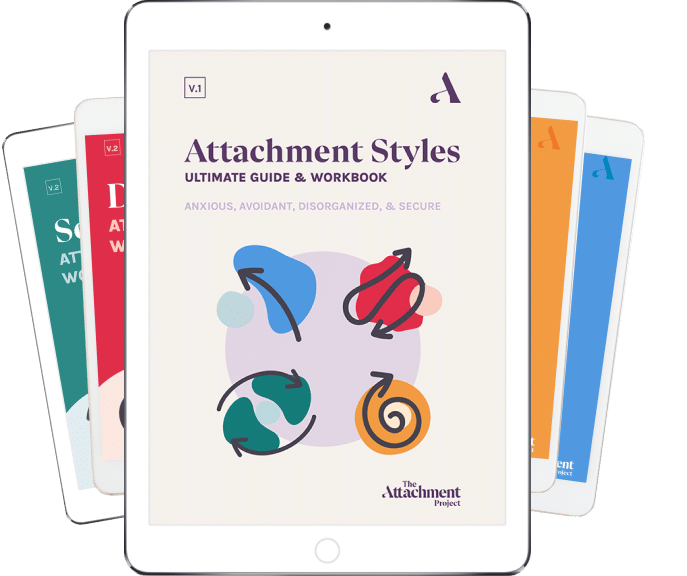
Our dedicated Attachment Style Workbooks or Ultimate Workbook on all four attachment styles help you to find the answers you need.
McCarthy, K. S., Connolly Gibbons, M. B., & Barber, J. P. (2008). The Relation of Rigidity Across Relationships With Symptoms and Functioning: An Investigation With the Revised Central Relationship Questionnaire. Journal of counseling psychology, 55(3), 346–358.
 Get mental health tips straight to your inbox