









4 Signs an Avoidant is Done With Your Relationship (Not Just Deactivating)

When you’re dating someone with an avoidant attachment style, you might find that they pull away often and tend to need their space, especially when things get intense. This is called avoidant deactivation1.
To people without an avoidant attachment style, avoidant deactivating strategies can be difficult to understand. Avoidant deactivation can easily be mistaken for the first warning signs of a break up – but this isn’t necessarily what the avoidant partner intends. When approached the right way, deactivating partners can actually come back feeling safer and more connected than before.
The line between avoidant deactivation behaviors and genuine relationship disengagement (also known as avoidant discard) is a thin one. There can be a lot of overlap, which naturally leads you to feel confused and uncertain about where your relationship stands. Fortunately, there are a couple of ways you might be able to tell when an avoidant partner is breaking up with you for good. With an awareness of these signs and avoidant partner communication, you might be able to find some peace and reassurance.
GET THE AVOIDANT ATTACHMENT WORKBOOK
In this article, we’ll help you to understand avoidant deactivation strategies, signs of actual relationship disengagement, and what to do when someone with an avoidant attachment deactivates temporarily or permanently.
Understanding Avoidant Attachment and Deactivation
First, it’s important to briefly understand avoidant attachment styles. Our attachment systems develop in infancy as a way to meet our needs. They dictate how we respond to our caregivers, and are shaped in turn by how our caregivers respond to us.
Avoidant attachments develop when our early caregivers consistently do not meet our needs. In order to maintain a sense of safety, infants whose needs aren’t met learn to downplay, or deactivate, their attachment systems. In other words, they cope with their lack of attention by disconnecting emotionally from their caregivers and learning to ignore their difficult feelings of uncertainty and rejection.
It’s theorized that this helps to maintain the connection they have with their caregiver – if they don’t feel hurt by the caregiver’s actions, then they can continue to feel good about their relationship. This helps them to feel safe. They learn to self-soothe not by successfully regulating their emotions, but by downplaying them instead of resolving the problem. As adults, this pattern can continue. They may even maintain strong relationships with their parents while minimizing the importance of early attachments2
Common Deactivating Strategies vs. Signs of Disengagement
When these patterns of deactivation continue into adulthood, they can manifest as a tendency to withdraw from emotional intimacy in relationships. People with avoidant attachment styles have learned to effectively shut down when there are high demands on their emotional system. When someone is deactivating, they may crave autonomy and separation, refuse to address a problem, and reject offers of support and affection1.
It’s understandable that this can look a lot like an impending break up. However, when an avoidant attachment system deactivates, this is the attachment system’s effort to maintain the close relationship – remember, it has learned that if it allows itself to be affected by its emotions, then it cannot continue to view its attachment as safe and reliable. If they did not shut down, they would not be able to continue to feel safe in your relationship.
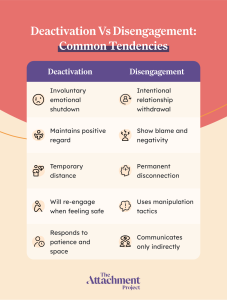
This doesn’t mean you should learn to live with it – the effect of deactivation on the other partner can be very distressing. It’s important to be clear within yourself and your relationship where you boundaries are and what you can do to look after yourself. While avoidance is a deeply learned behavior, as adults we are able to relearn our attachment styles; with time, trust, and positive relationship experiences, you might find your partner’s periods of deactivation becoming shorter and more sporadic until they’re no longer a problem.
Focusing on yourself can also help you to respond more positively. Responding negatively to someone with a deactivated attachment system can lead us into some intense disagreements, unpleasant cycles, and yes – even premature break ups.
It can be difficult to avoid responding negatively when the experience can be so anxiety-inducing. With this in mind, it can be reassuring to know the signs of disengagement and how they differ from deactivation. While there’s no foolproof way to tell what someone else is thinking and feeling, here are a few potential signs your partner might be instigating a break up instead of just deactivating.
Signs an Avoidant is Done With You
A 2012 study at the University of Kansas looked into what happens when different attachment styles initiate a break up3. Using their findings, we can see the differences between what happens when someone with an avoidant attachment is deactivating vs breaking up with you.
START HEALING AVOIDANT ATTACHMENT
Not every person with an avoidant attachment will follow the same patterns, and checking one or two of these boxes doesn’t necessarily mean a break up is on the way; life stress and other factors might play into these behaviors. However, even if these behaviors have an explanation, they are not healthy ways to cope and can be painful to be on the receiving end of. If you feel your partner is exhibiting these signs often, you may wish to consider whether you need to redefine the boundaries and expectations of your relationship.
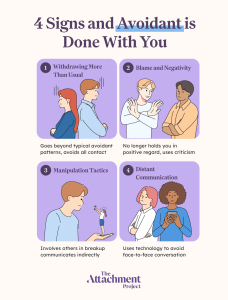
These are the break up methods the researchers found were most often used by avoidant partners:
1. Withdrawing More Than Usual
Withdrawal is a cornerstone of deactivation, so it shouldn’t come as a surprise when someone with an avoidant attachment style pulls away. However, if they pull away more than usual, they may be disengaging for good.
If they keep conversations short and tell you very little about what they’re getting up to, seem to discourage you from sharing much about what’s going on in your life, and generally avoid contact as much as possible, they may be disengaging rather than deactivating. Other warning signs include decreasing displays of affection, avoiding accepting or doing favors, and spending more time with other people.
All of these might occur to some extent in normal deactivation, but if your gut is telling you these behaviors are more intense than usual, they may signal disengagement.
2. Blame and Negativity
The study found that when people with avoidant attachment styles are breaking up with someone, they tend not to bother softening the blow – while others might take the blame, emphasize the positives of their relationship, and go to any lengths to avoid hurting their partner’s feelings, people with avoidant attachment styles prefer to do the opposite.
Remember how the deactivation system develops in an attempt to save the relationship? If your partner is deactivating, they likely still hold you in positive regard1. This initially surprised researchers, as mistrust in and devaluing of others is another core element of the avoidant attachment style. However, in close relationships where trust and value have been established, these avoidant traits are less prevalent.
So, if your avoidant partner does not still show that they trust and value you, if they blame you for their withdrawal or aren’t able to see you in a positive light, they may be disengaging instead of deactivating.
3. Signs of Manipulation
Avoidant partners in this study were also likely to use manipulation tactics to instigate a break up rather than doing it directly. This included hinting to or straight up informing third parties that they wanted to break up with their partner in the hopes that it would get back to them, or even asking someone else to break up with their partner for them. They might also try to introduce or encourage new potential partners for their current partner to date instead, or they may start dating other people themselves – cheating – hoping that this would communicate their break up intentions to their partner.
Manipulative tactics like these might still manifest from the instigator’s avoidance of other people’s emotions, but they shouldn’t form part of the usual behaviors in a deactivated attachment system. If your partner is repeatedly using manipulation like this to respond to conflict, you may wish to consider whether their behavior is something you can work through together or whether it potentially signifies a larger problem.
4. Distant Communication
Finally, when avoidant partners were initiating a break up, they often used indirect communication methods to end the relationship. This can involve messaging, calling, or writing, or even changing their online profile’s relationship status (this was the be-all-end-all in 2012, when the study was conducted), or blocking their partner.
Without a face-to-face discussion, these methods of communication can sometimes leave us feeling like there’s still room for negotiation. Unfortunately, people with avoidant attachment styles do use them to disengage, and it’s probably best to take them at face value. If your partner is not disengaging but just deactivating, they may pull away without going so far as to do something like this to communicate that they want to end the relationship.
Temporal Patterns in Avoidant Attachment Disengagement
If you’re dating someone with an avoidant attachment style and experiencing their deactivating behaviors, you probably already know that they could last minutes to months. There’s no set deadline on when someone feels ready to re-approach a relationship. But what about disengagement?
Every break up is different – the truth is, there’s no predictable timeline for when it starts or how long it lasts. However, what we can say is that when one or both partners in a relationship score highly on attachment avoidance, there are some patterns that might emerge that push the relationship closer to a break up.
Researchers in Spain recently investigated the withdrawal-demand (also known as withdrawal-aggression) cycle in couples4. The theory is that when one partner withdraws or stonewalls during an argument, this provokes the other to make greater demands or criticisms, in turn lowering relationship satisfaction for both partners.
The results of their investigation supported this theory, with higher avoidance traits, withdrawal, and demand all shown to have significant influences on relationships satisfaction, both directly and indirectly. So, if you find yourselves in this push and pull cycle during conflict, it may be lowering both of your feelings of relationship satisfaction and drawing a break up nearer. Keep reading to find out what we recommend to break the cycle and stay on a more stable course.
The No-Contact Period as a Behavioral Assessment Methodology
“No contact” had a viral moment late in 2024, with the search term “going no contact” reaching an all time high in September that year. This is the idea of making zero contact with your partner, ex, or love interest, often with the goal to elicit a response.
However, going no contact shouldn’t be used as a behavioural test. Many people use it to see what their partner will do, or as a kind of “payback” for the lack of attention they might feel from their partner. While going no contact can have other benefits, testing your partner shouldn’t be one of them.
Instead, the no contact period can be a powerful tool for self-reflection and gaining perspective. The purpose of your no contact period should be to reconnect with yourself, process your feelings, and recognize that your own joy and wellbeing does not depend on whether or not your partner comes back.
EXPLORE THE AVOIDANT ATTACHMENT WORKBOOK
Psychologists agree: in a 2024 Forbes article, American psychologist Dr. Mark Travers writes:
Consider it a period for personal growth, healing and gaining clarity. Ensure that your decision to go “no-contact” is driven by a genuine need for self-discovery and emotional well-being.5
Even though you should be focusing on yourself, how your ex responds during this time could tell you something about whether the relationship is or isn’t worth pursuing. For example, if you see the kind of manipulative behavior we discussed earlier, you might start to feel that cutting contact was the right thing to do.
What to Do When an Avoidant Shuts Down Permanently
When an avoidant person shuts down for a long time, try not to act on any urge to force a response from them. This can be particularly hard for partners with an anxious attachment style, as avoidant shut down behaviors can trigger intense anxiety – but pressuring them for affection will only push them further away.
Researchers have found that higher withdrawal during conflict predicts negative perceptions of a partner’s problem solving strategies6. This, in turn, reduces relationship satisfaction – no matter how good your problem solving may be, insisting on it at the wrong time can still be detrimental to your relationship. Wait until your partner is ready before trying to resolve the problem again.
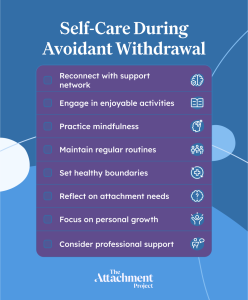
When your partner shuts down, the best thing you can do to preserve your relationship is to give them the space they need and try to learn more about their avoidance. At this time, it’s important to focus on yourself too – how do your needs and boundaries play into this? You can’t pour from an empty cup, so make sure your own needs aren’t pushed aside. If you find yourself unable to balance your needs with your partner’s, you may wish to consider redefining your relationship.
Moving Forward With New Relationship Awareness
Learning more about avoidance and its impact on your relationship can help you to move forward with greater relationship awareness. Better communication could help you to avoid the withdrawal-demand cycle and build trust, which may in turn help your partner to move toward a more secure attachment4. Soft communication styles and humor can help avoidant partners to feel safe during conflict avoidance7.
If you’re moving forward with dating other people, it’s important to know what you want from a relationship from now on. Being upfront about this from the beginning and using open communication throughout can help future partners know what to expect, making it easier to set expectations and boundaries should avoidant deactivation become a problem again.
When It’s Just Deactivation: Response Strategies for Temporary Withdrawal
When your partner has a tendency to withdraw short term, the same advice applies – give them the space they need, focus on yourself, and use soft communication strategies when they’re ready to resolve the conflict.
When your partner does return, try to welcome them back with positive regard. Greeting them with negativity and anger can push them back into withdrawal, even though you might still feel upset or frustrated by their avoidance. It’s still important to address your experience of the withdrawal, but again, try to do this with soft communication strategies to help get your message across.
DISCOVER YOUR ATTACHMENT STYLE
Conclusion
When an avoidant person withdraws, it can look a lot like they have lost interest or they want to end the relationship. However, they usually just need space to process their emotions. When they come back, positive problem solving can make your relationship stronger than it was before.
If an avoidant partner is withdrawing with the intention to instigate a break up, there may be some telltale signs. Avoidant breakup strategies don’t tend to look the same as normal avoidant withdrawal. Knowing the difference can help you to feel more secure when you do experience your partner’s deactivation.
If you experience deactivation from an avoidant partner, give them space and let them come back to you before you try to resolve the problem. Keep your own needs in mind at the same time, and do what’s right for yourself as well as your relationship.
FAQs
How long does typical avoidant deactivation last?
Avoidant deactivation can last minutes to months – it depends on the person and the severity of the trigger.
Can an avoidant come back after saying it’s over?
Avoidant partners may come back after saying it’s over, but if someone does this often, it can be confusing and upsetting – it’s important to discuss your boundaries.
What’s the difference between avoidant deactivation and ghosting?
Avoidant deactivation occurs when an avoidant partner emotionally withdraws from the relationship. They may or may not maintain contact, but they’ll usually return when they’re ready. When somebody ghosts, they cut contact without any explanation and don’t return. Ghosting isn’t always a direct result of avoidant deactivation.
How can I protect myself emotionally while dating someone with avoidant attachment?
You can protect yourself emotionally while dating someone with avoidant attachment by understanding its root causes, how it shows up in your relationship, and how it interacts with your own attachment, needs, and boundaries.
Do avoidants deactivate if they don’t like you?
Avoidant partners can deactivate for several reasons, and not necessarily because they don’t like you. In fact, avoidant partners might deactivate because they like you and they need space to process their emotions.
Why do Avoidants suddenly end relationships?
Avoidant partners can suddenly end relationships when their avoidant attachment is triggered. This could be due to intensity in the relationship, conflict, or something else that makes the attachment feel unsafe.
References
-
Richardson E, Beath A, Boag S. Default defenses: The character defenses of attachment-anxiety and attachment-avoidance. Current Psychology. 2023 Nov;42(32):28755-70.
-
Dozier M, Kobak RR. Psychophysiology in attachment interviews: Converging evidence for deactivating strategies. Child development. 1992 Dec;63(6):1473-80.
-
Collins TJ, Gillath O. Attachment, breakup strategies, and associated outcomes: The effects of security enhancement on the selection of breakup strategies. Journal of Research in Personality. 2012 Apr 1;46(2):210-22.
-
Bretaña I, Alonso-Arbiol I, Recio P, Molero F. Avoidant attachment, withdrawal-aggression conflict pattern, and relationship satisfaction: A mediational dyadic model. Frontiers in psychology. 2022 Jan 31;12:794942.
-
Travers, M. A Psychologist Weighs In On The Post-Breakup ‘No-Contact’ Rule. Forbes. 2024 Jan 26. Available at: https://www.forbes.com/sites/traversmark/2024/01/26/a-psychologist-weighs-in-on-the-post-breakup-no-contact-rule/ (Accessed 2025 Apr 20)
-
Bretaña I, Alonso-Arbiol I, Molero F, Pardo J. Avoidant attachment and own and perceived partner’s conflict resolution in relationship satisfaction. Journal of Social and Personal Relationships. 2020 Dec;37(12):3123-38.
-
Overall NC, Simpson JA, Struthers H. Buffering attachment-related avoidance: softening emotional and behavioral defenses during conflict discussions. Journal of personality and social psychology. 2013 May;104(5):854.
 Get mental health tips straight to your inbox